About me
Hi!  I am currently a PhD-track student in computer science at UBC, working under the supervision of Alla Sheffer. I am excited to explore research topics in computer graphics and geometry.
I graduated from the Tang Ao-Qing Honors Program at Jilin University, where I had the opportunity to explore various research areas, including computer graphics, computer vision, and data mining, through internships at Zhejiang University and the University of Alberta.
Publications
GaussianPrediction: Dynamic 3D Gaussian Prediction for Motion Extrapolation and Free View Synthesis
Boming Zhao, Yuan Li, Ziyu Sun, Lin Zeng, Yujun Shen, Rui Ma, Yinda Zhang, Hujun Bao, Zhaopeng Cui
Siggraph. [PDF] [BibTeX]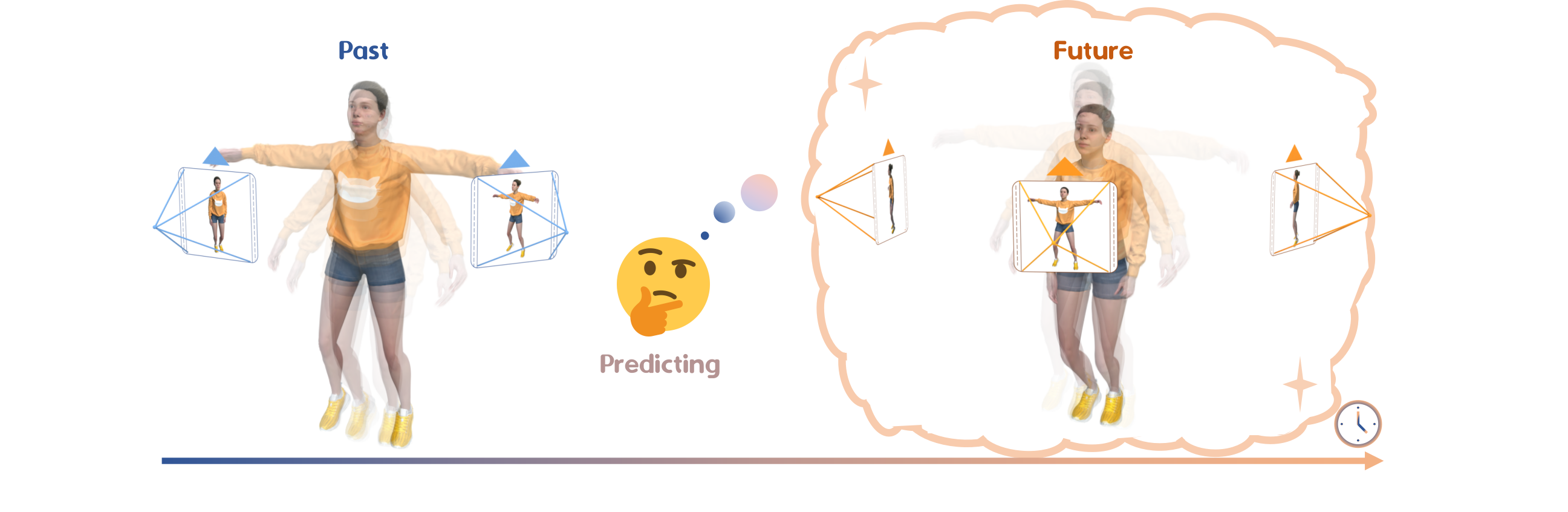
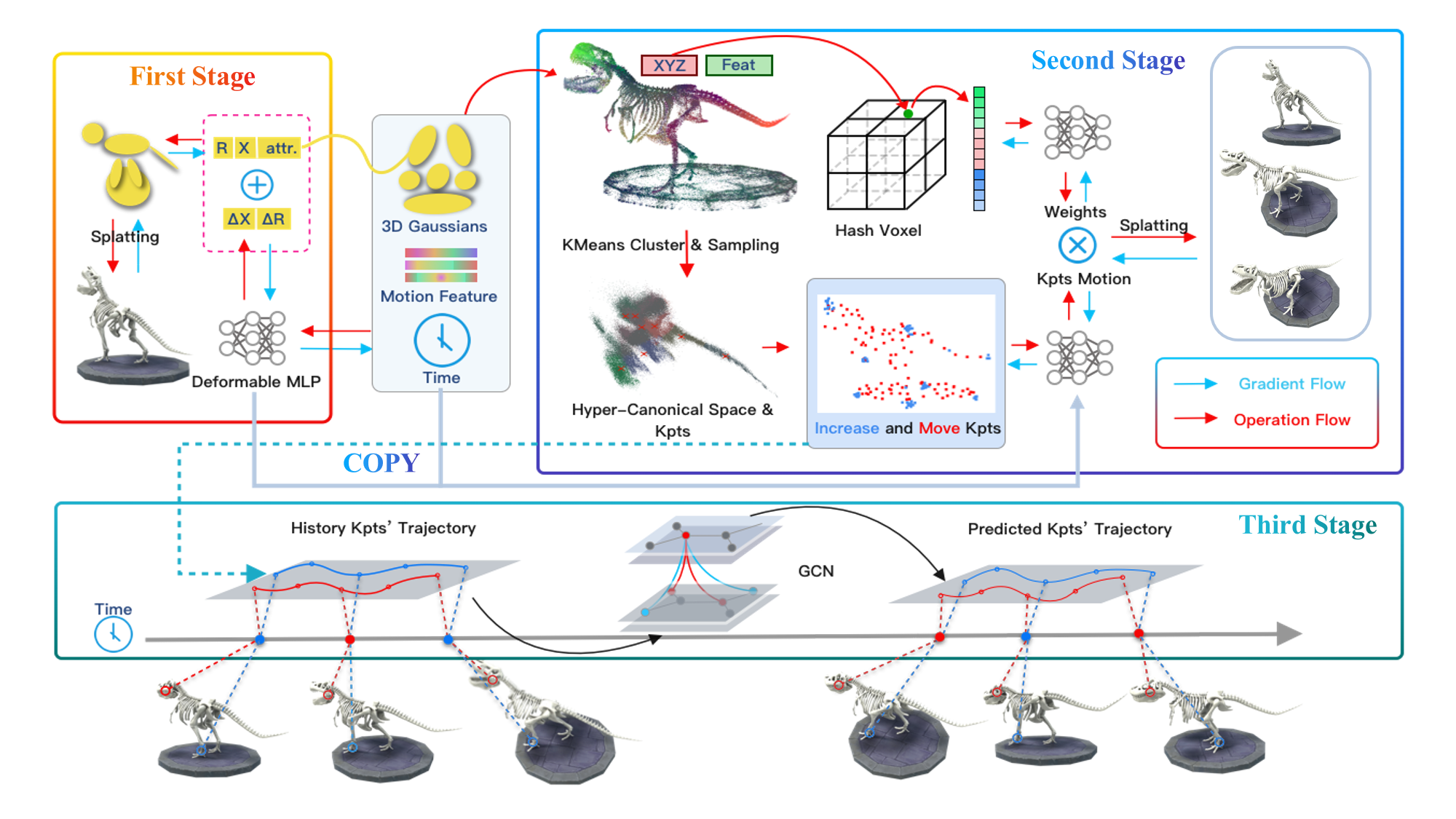
In this work, we propose a more compact 3D Gaussian Splatting (3DGS) representation for dynamic scenes based on key points. With this representation, we achieved an exciting task, which we call future synthesis: predicting the future movements of dynamic objects and generating renderings from arbitrary perspectives.From Incomplete Coarse-Grained to Complete Fine-Grained: A Two-Stage Framework for Spatiotemporal Data Reconstruction
Ziyu Sun, Haoyang Su, En Wang, Funing Yang, Yongjian Yang, Wenbin Liu
Preprint. [PDF] [BibTeX]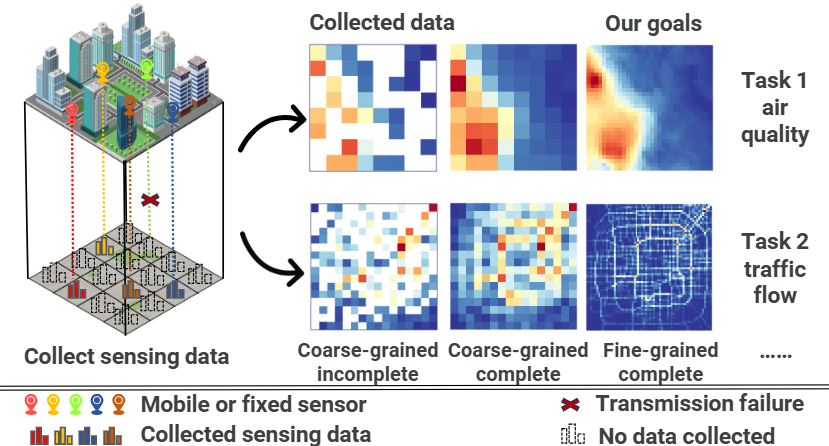
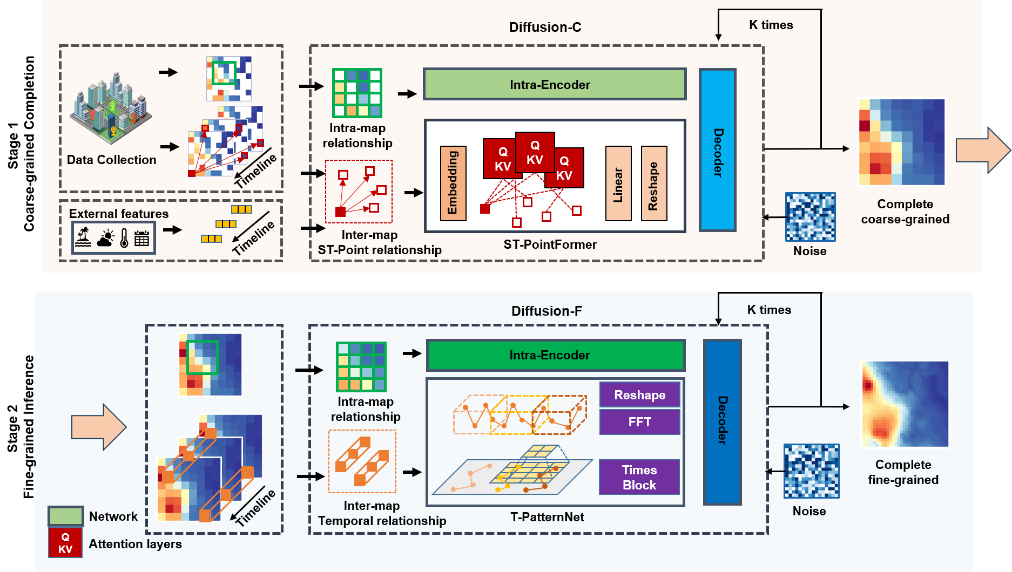
This is the second work in our “Fine-Grained Spatiotemporal Sensing” series, where we focus on improving the spatial granularity of city data.Our key contribution is the introduction of a novel task called “Spatiotemporal Data Reconstruction,” which leverages concepts from computer vision to infer a complete, fine-grained spatiotemporal map from incomplete, coarse-grained observations. We also propose a two-stage diffusion model that effectively captures spatiotemporal characteristics, leading to state-of-the-art performance.Toward Time-Continuous Data Inference in Sparse Urban CrowdSensing
Hao Du, Wenbin Liu, Ziyu Sun, Haoyang Su, En Wang, Yuanbo Xu
AAAI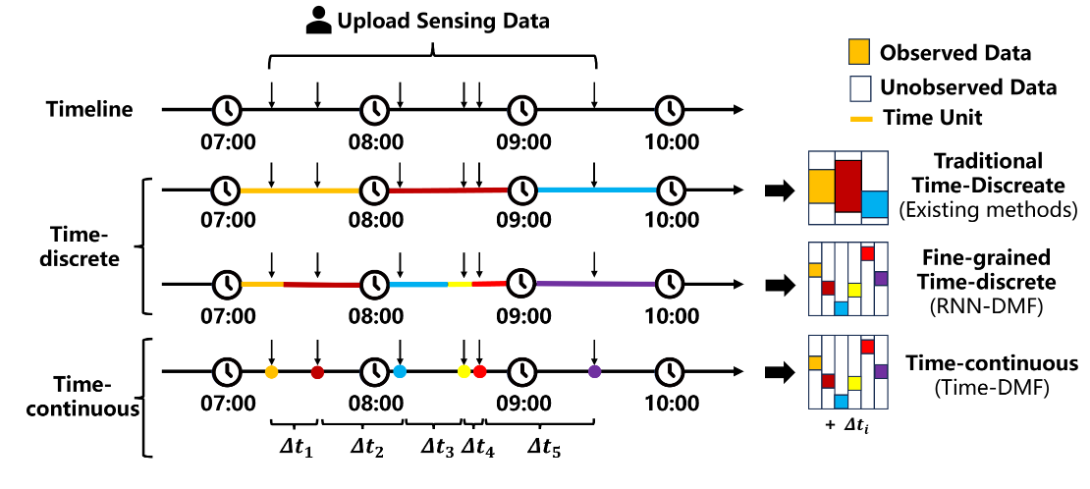
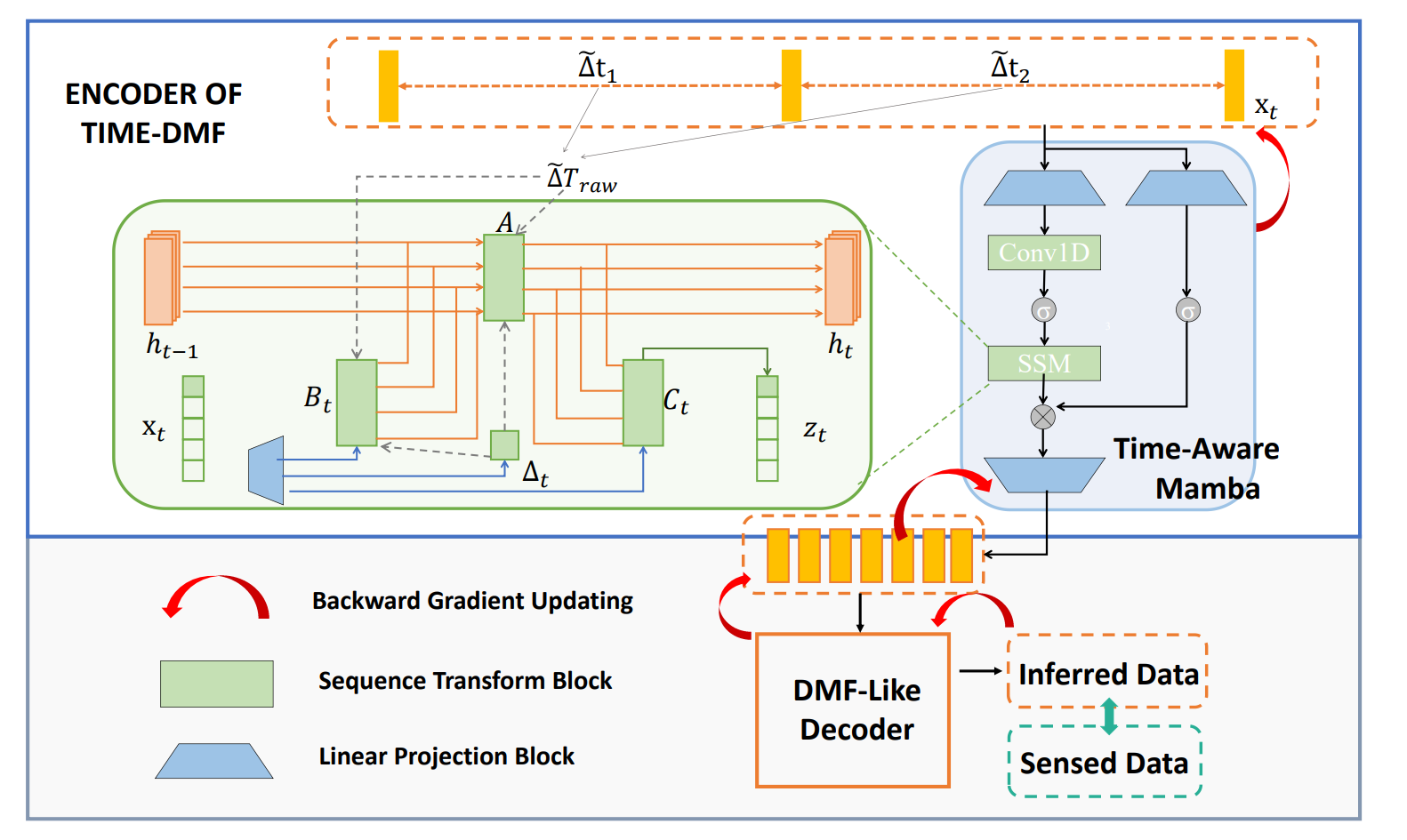
This is the first work in our “Fine-Grained Spatiotemporal Sensing” series, where we focus on enhancing the temporal granularity of perceptual data, and even directly modeling continuous-time representations. Our key observation is that existing approaches often rely on “time-discrete” preprocessing steps before applying their algorithms, which can lead to inaccuracies. Most existing methods divide the timeline into discrete intervals and aggregate data within each unit, assuming data remains static within these intervals. In our research, we first adapt existing time-discrete solutions to a fine-grained approach by slicing the timeline into the smallest possible units for alignment with prior work. We then elevate this approach into a time-continuous model that accurately represents data along a continuous timeline.
Projects
-
CUDA-Accelerated Rasterization and Ray-Tracing from Scratch
Finished during my internship the University of Alberta [Project Link.]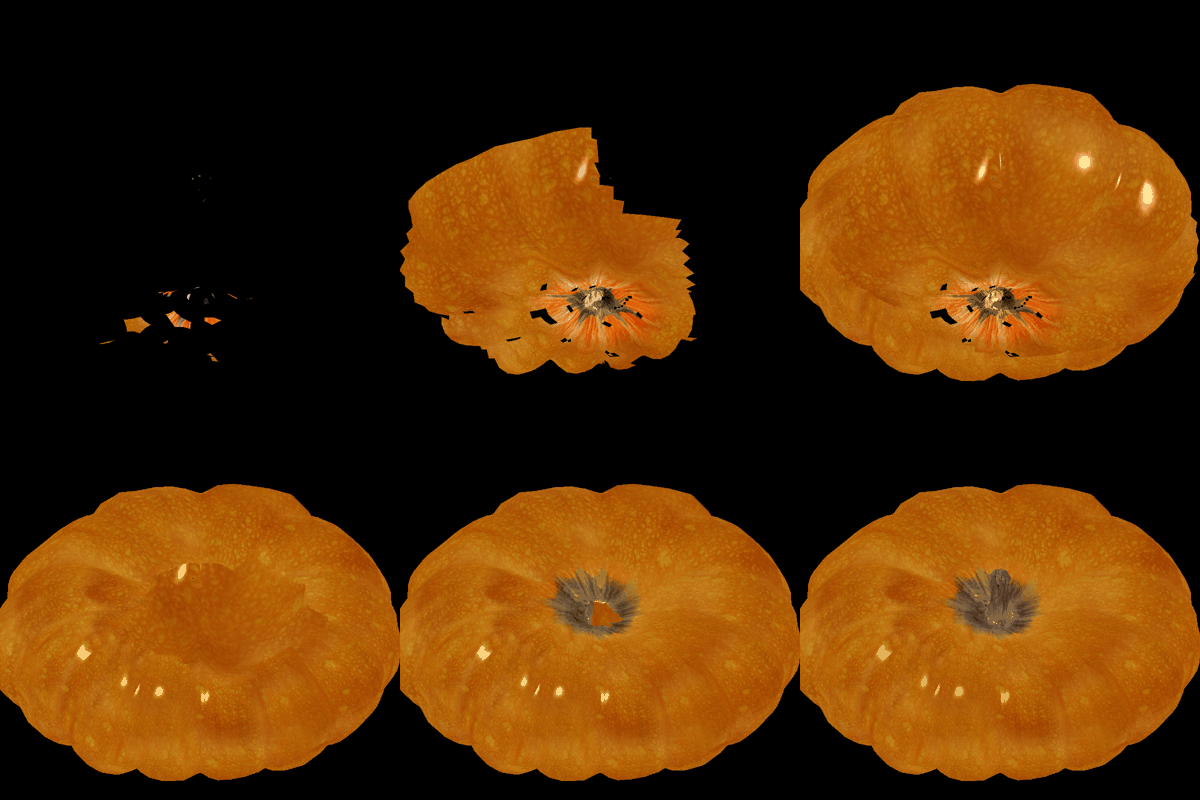
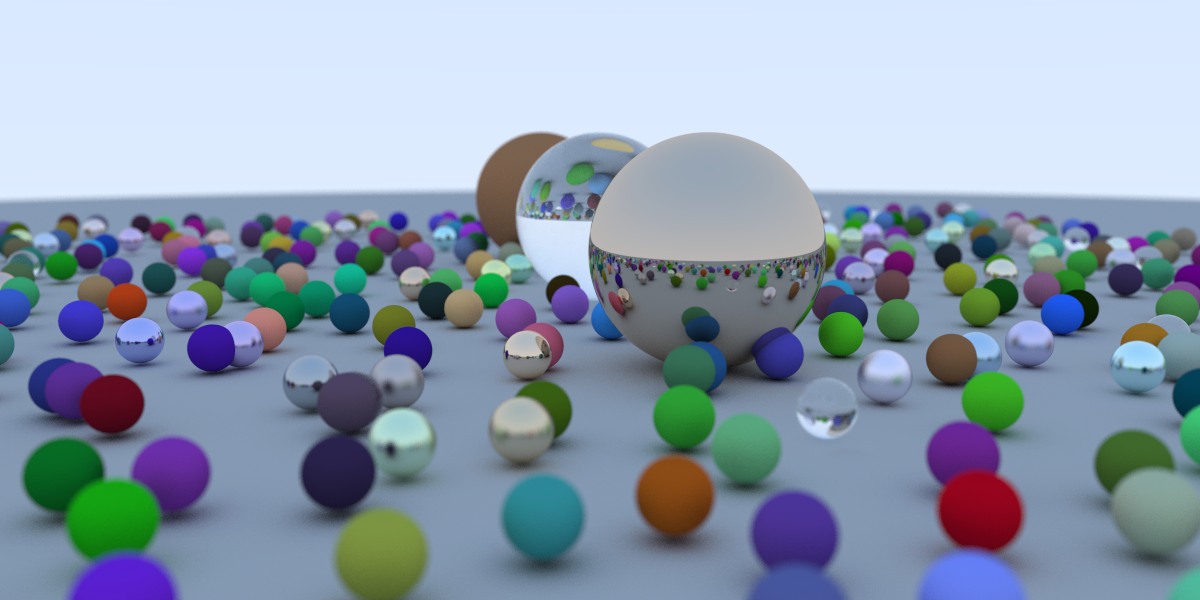
The renderer features two pipelines: one based on rasterization and the other on ray tracing. It also includes optimizations such as ambient occlusion mapping and shadow mapping. I also achieved over 100x rendering speedup through parallel computation using CUDA on ray tracing pipeline. Writing codes to translate elegant mathematical concepts to visually appealing images always excites me.
TA
- CPSC 427: Video Game Programming, UBC